> For the complete documentation index, see [llms.txt](https://docs.roivenue.com/roivenue-resources/llms.txt). Markdown versions of documentation pages are available by appending `.md` to page URLs; this page is available as [Markdown](https://docs.roivenue.com/roivenue-resources/roivenue-training/data-exports/export-to-azure-blob-storage.md).
# Export to Azure Blob Storage
Roivenue can export data to several data storage platforms. One of them is Azure Blob Storage
**ROIVENUE Data Exporting into Azure Blob Storage** is a helpful tool for dealing with files with **greater data size** and can be a valuable part of your arsenal for further data processing or analysis.
## Step 1: Go to the Last Step of the Export
It doesn't matter if you want to export data from connector or from data exports from ROIVENUE.
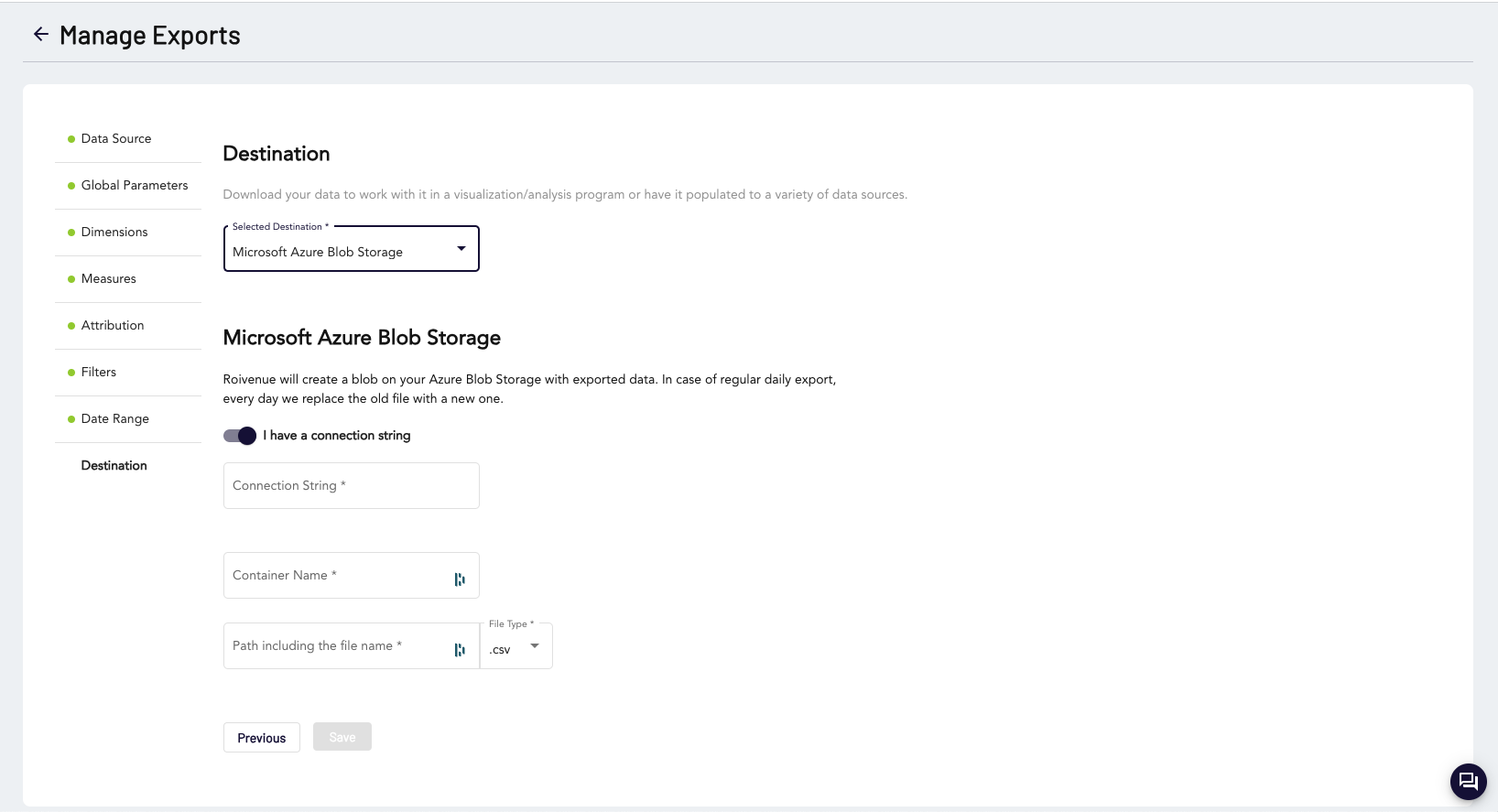
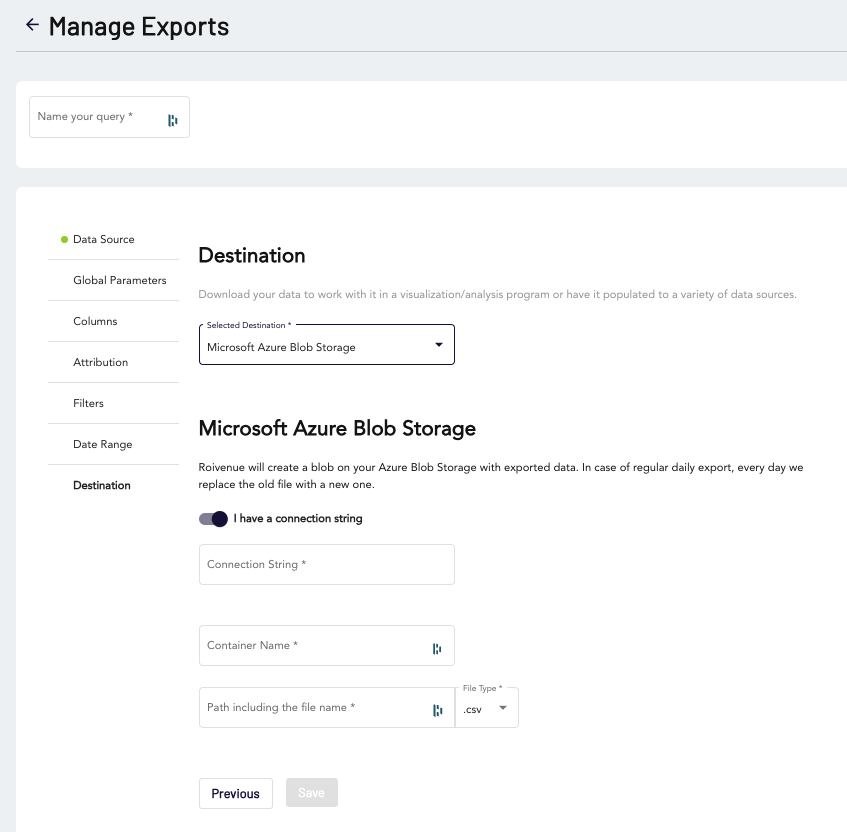
ROIVENUE Data Exports wizard
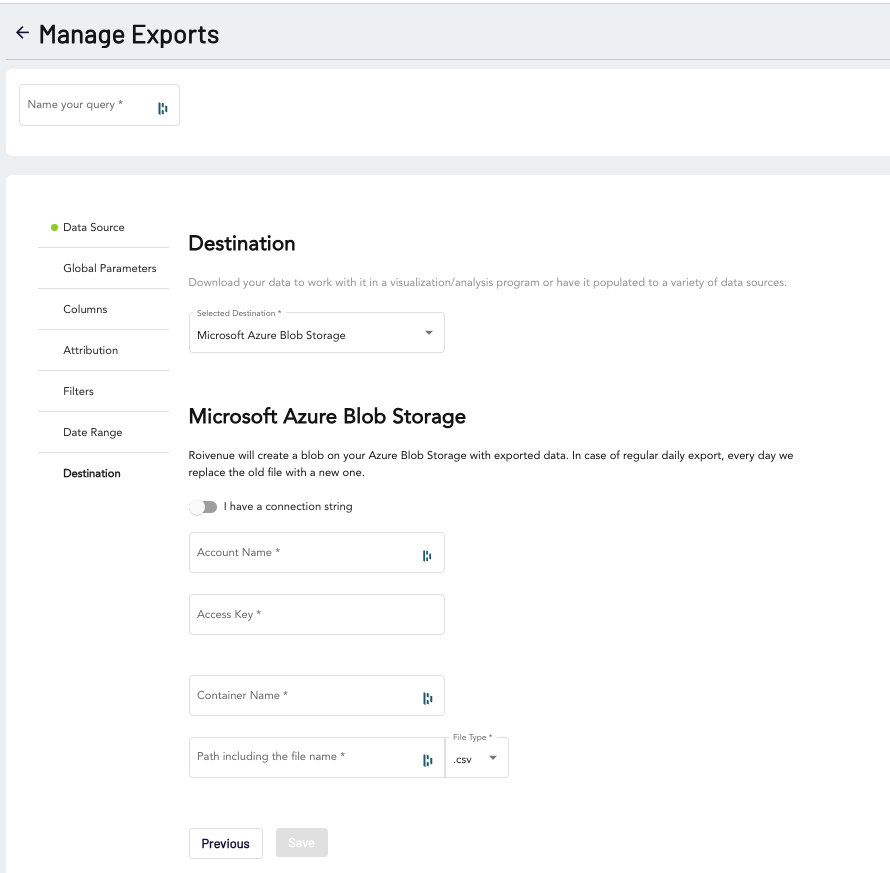
There is a lot of input fields that need to be filled, in order to successfully export to Azure Blob Storage. Let's get slowly through them one by one.
### **Account Name:**
Account name is the name of the Storage Account that can be seen in the interface of Azure Explorer.

### **Access Key:**
Access key is "Primary Key" from the Azure Explorer UI.

### **Container Name:**
Every storage account **can have many individual containers for effective sorting of your data**. During setup of the connector, w**rite the name of the container to which you want to export your data.**

### **Path including the file name:**
Due to Blob Storage working differently than other storage solutions, the last remaining step of our wizard is to write the path of the file in the selected container with your desired file name. **Check the example below.**

**The path to this file is** "*test/testteam-direct-export/connector/" .* That means that our exports will save the file in this exact folder. But, to name the exported file, you also need to include the file name in the input field. The outcome should look like this:

**And this is the whole setup all together:**